

Build a Career in Process Piping with Specialized Drafting Training
Canada’s oil and gas industry provides various job opportunities for highly trained and experienced workers. Bay River College’s 1-year Process Piping Drafting program is designed to train individuals seeking to enter and succeed in this vital Canadian sector.
This comprehensive process piping drafting training equips students with industry-relevant skills, including drafting software like Autodesk AutoCAD, as well as essential administrative, interpersonal, and business communication skills.
What is Process Piping?
Process piping refers to the systems used to transport fluids and gases within industrial facilities such as oil refineries, power plants, and chemical processing sites. These systems require detailed piping design, which is why skilled drafters play a crucial role in these industries.
What You’ll Learn – Piping Drafting Training Outcomes
Students in the Process Piping Drafting diploma program gain hands-on and theoretical knowledge of:
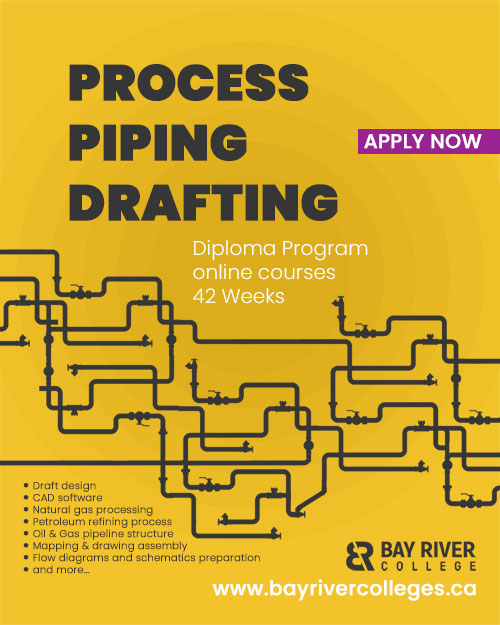
- Principles of natural gas processing
- Oil and gas pipeline structure and design
- Petroleum refining systems
- Oil sands and petrochemical resources
- Draft design using Autodesk AutoCAD
- Creating flow diagrams and schematics
- Mapping and drawing assembly
- Producing isometric drawings of pipelines
- Industry-specific regulations and drafting standards
Real-World Experience with Practicum Training
Bay River College ensures that every student graduates with job-ready skills by providing 160 hours of practicum. This on-site experience complements classroom theory and allows students to apply their piping design skills in real-world environments.
Career Opportunities After Graduation
Graduates of the Process Piping Drafting program can pursue entry-level roles in various industries, including:
- Oil and gas
- Engineering consulting
- Petrochemical and construction
- Utilities and municipal infrastructure
- Equipment fabrication
- Government agencies
These roles often involve using AutoCAD and other drafting tools to support engineering teams in developing technical plans and documents.
Why Choose This Piping Drafting Course?
This drafting course offers a solid pathway into Alberta’s booming oil and gas sector, home to some of Canada’s highest-demand technical jobs. According to Job Bank Canada, piping drafting positions in the province are expected to grow or remain steady for the next decade, ensuring job security and growth opportunities.
Who Should Apply?
This process piping drafting training is ideal for individuals who:
- Want to work in engineering or construction drafting
- Are detail-oriented and enjoy creating technical drawings
- Excel at using computer-aided design (CAD) software
- Have strong organizational and communication skills
- Are interested in municipal planning or infrastructure projects
Whether you’re starting fresh or upgrading your skills, this program offers both flexibility and industry-aligned outcomes.
Frequently Asked Questions
Question: How do you become a piping designer?
Answer: To become a piping designer, you typically complete a process piping drafting program or diploma, gain experience with CAD software, and train through hands-on practicums or internships.
Question: Which code is used for process piping?
Answer: The ASME B31.3 code is widely used in process piping design. It provides standards for materials, design, construction, and testing of piping systems.
Question: Is piping design a good career?
Answer: Yes. Piping design is in demand across oil and gas, petrochemicals, and construction. It offers high earning potential, job stability, and room for growth.
Question: What is a piping draftsman?
Answer: A piping draftsman creates technical drawings and diagrams for piping systems using CAD software. They support engineers by turning concepts into construction-ready plans.