Overview
Bay River College’s IPAC in Dentistry Program provides dental professionals with a comprehensive foundation in Infection Prevention and Control (IPAC), with a strong focus on the practical application of infection prevention principles in dental practice.
The course equips students with the knowledge and skills to develop, implement, and manage an IPAC program tailored to a dental practice using a risk management framework. Students develop an understanding of the scientific principles and practical applications of asepsis, disinfection, and sterilization, while learning how to align infection prevention practices with public health and regulatory requirements.
The curriculum covers the full spectrum of infection prevention and control in dental settings, including instrument reprocessing, environmental asepsis, equipment maintenance, quality assurance, written protocols, compliance audits, and record management.
A strong emphasis is placed on leadership in IPAC in dentistry. Students learn to communicate effectively, train dental team members, conduct routine audits, identify potential issues, and develop evidence-based solutions using a risk-assessment approach.
Upon completion, students will be better prepared to establish, implement, and monitor an effective IPAC program within a dental practice, supporting safe and consistent infection prevention practices and patient care.
Key Learning Outcomes
- Upon successful completion, students will be able to:
- Lead the development and implementation of an IPAC program tailored to a dental practice.
- Apply evidence-based principles of asepsis, disinfection, and sterilization.
- Execute and monitor critical IPAC processes, including instrument reprocessing, environmental cleaning, and equipment maintenance.
- Identify common IPAC errors and formulate effective solutions using a risk-assessment model.
- Communicate effectively to lead a team, conduct routine audits, and maintain accurate records.
Curriculum Details
- CDC Summary of Infection Prevention Practices
Covers key CDC guidelines for infection control in dental care, focusing on patient and healthcare safety through standard precautions. - Infection Control and Infectious Diseases Overview
Introduces infectious agents, transmission modes, the chain of infection, antibiotic resistance, and stewardship responsibilities in dental settings. - Hand Hygiene and Respiratory Etiquette
Details effective handwashing techniques, timing, product selection, and respiratory hygiene to limit airborne disease spread. - Personal Protective Equipment (PPE)
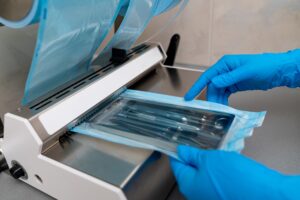
Explains proper selection, donning, removal of PPE, dermal health issues, and fostering a safety culture in dental clinics. - Sterilization and Instrument Reprocessing
Focuses on classification of dental instruments by infection risk, sterilization processes, reprocessing dental handpieces, and use of single-use devices. - Environmental Cleaning and Waste Management
Teaches cleaning protocols for clinical and non-clinical surfaces, medical waste handling, chemical safety, and biohazard disposal. - Facility-Level Infection Control Program
Guides developing and maintaining infection control programs with risk assessment, quality assurance, training, and compliance documentation. - Exposure Control and Safety Practices
Covers managing occupational exposure risks, sharps safety, needlestick prevention, and safe injection protocols. - Dental Unit Waterline Maintenance
Addresses risks from dental waterlines, microbial contamination prevention, and water quality standards. - Logs and Audit Resources
Explains the importance of maintaining detailed sterilization cycle logs and IPAC documentation, conducting routine audits using standardized checklists, correcting deficiencies, and complying with regulatory requirements for record-keeping and quality assurance.
Practical Application
The program emphasizes the practical application of infection prevention principles within dental practices. Students learn how to assess existing practices, identify gaps, develop appropriate protocols, and apply risk-based solutions to improve IPAC compliance.
Particular attention is given to written protocols, workflow management, instrument reprocessing, sterilization monitoring, environmental safety, equipment maintenance, and quality assurance.
Who Should Take This Course?
This program is designed primarily for:
- Dental professionals
- Registered Dental Hygienists
- Dental assistants
- Dental practice teams
- Dental practice managers
- Professionals responsible for infection prevention and control within dental settings
It may also be suitable for dental practices seeking to strengthen their infection prevention systems, protocols, documentation, and quality assurance processes.
Learning Approach
The course focuses on practical, evidence-based learning and application within dental practice settings. Learning activities may include:
- Instructor-led teaching
- Practical examples and case-based learning
- Review of IPAC procedures and protocols
- Risk-assessment exercises
- Audit and quality-assurance activities
- Discussion of real-world dental practice scenarios
Institution Commitment
At Bay River College, we focus on diploma and certification programs designed to meet real workforce needs. We are committed to the success of our students and graduates.