

In Brief: Cybersecurity Incident Response
- Cybersecurity incident response is the organized process used to prepare for, identify, contain, remove, and recover from cyber incidents.
- The Cyber Centre separates the lifecycle into six main stages.
- Responders may analyze logs, isolate systems, remove malicious content, restore services, and document lessons learned.
- Incident response combines technical cybersecurity skills with communication, documentation, and decision-making.
Cybersecurity incident response is the organized process an organization uses to prepare for, detect, analyze, contain, eradicate, and recover from cybersecurity incidents. It also includes reviewing what happened afterwards so the organization can improve its security controls and response plan for future events.
For prospective students, the incident response process provides a useful look at cybersecurity work after suspicious activity has been detected. The Canadian Centre for Cyber Security describes incident handling as a capability involving preparation, detection and analysis, containment, eradication, and recovery.
These activities connect directly with skills students can develop through our Cyber Security and Cloud Computing Diploma.
What Are the Main Stages of A Cybersecurity Incident Response?
The Canadian Centre for Cyber Security identifies preparation, detection and analysis, containment, eradication, recovery, and post-incident activities and lessons learned as the main lifecycle stages.
The cybersecurity incident response steps can be summarized as:
- Prepare: establish procedures, backups, roles, communications, and response capabilities.
- Detect and analyze: monitor systems, investigate suspicious activity, determine scope, and prioritize the incident.
- Contain: limit the threat and prevent further damage.
- Eradicate: identify the root cause and remove malicious content or remaining attack vectors.
- Recover: restore affected systems and verify that they can safely return to operation.
- Learn: review the incident, document lessons, and improve future detection and response.
| Stage | Purpose | Common Tasks | People Who May Be Involved |
|---|---|---|---|
| Preparation | Get ready before an incident | Risk assessment, backups, response plans, exercises | Security, IT, management |
| Detection & analysis | Establish what happened | Monitor alerts, analyze logs, scope affected systems | SOC/security analysts, incident responders |
| Containment | Limit damage | Isolate devices, restrict connectivity, protect unaffected systems | Security, network/system administrators |
| Eradication | Remove the cause | Remove malware, patch vulnerabilities, address attack vectors | Incident responders, IT/security teams |
| Recovery | Restore operations safely | Restore backups, test systems, monitor for recurrence | IT, security, system owners |
| Lessons learned | Improve future response | Root-cause review, documentation, plan updates | Response team, management, relevant stakeholders |
Actual incident response team roles vary with the organization and incident.
What Does Incident Response Look Like in Practice?
Consider this hypothetical example. This is an illustrative scenario, not a real BRC student or employer case.
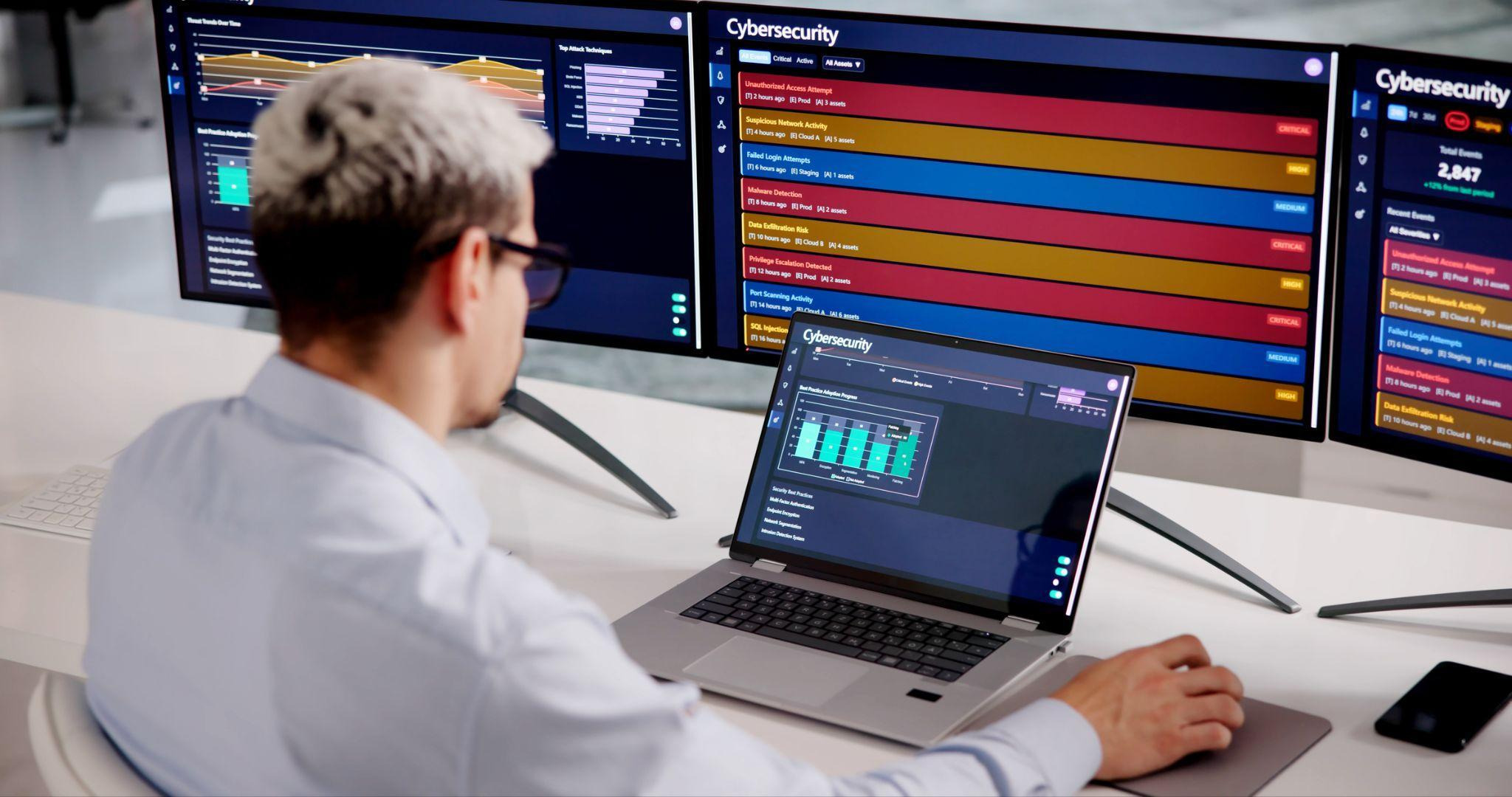
A company’s monitoring tools flag unusual account activity followed by suspicious connections from an employee workstation. An analyst reviews logs and confirms that the behaviour needs further investigation.
The team could isolate the affected device to limit further access, determine which systems or accounts were affected, preserve relevant information, and identify how the compromise occurred. After removing the threat and addressing the vulnerability, the organization can restore affected services and monitor them for further suspicious activity.
Finally, the team documents what happened and considers how detection rules, procedures, controls, or employee training should change.
The Cyber Centre similarly recommends documenting facts throughout an incident, identifying affected systems during eradication, removing malicious content, addressing residual attack vectors, and testing restored systems during recovery.
What Is the Difference Between an Incident and a Data Breach?
A cybersecurity incident is broader: it can involve unauthorized activity, malware, service disruption, compromised systems, or other events affecting security.
A breach involves compromised information. The Cyber Centre specifically states that an incident involving personal information is considered a privacy breach when control of that information is lost, or it is compromised, disclosed, used, collected, retained, disposed of, or accessed improperly.
This means not every cybersecurity incident is a data or privacy breach, although one incident can become both.
Who Is Responsible for Responding to a Cybersecurity Incident?
Responsibility is usually shared across a defined response team rather than resting with one cybersecurity employee.
Technical personnel may include SOC analysts, incident responders, network administrators, system administrators, and security specialists. Depending on the incident, management, legal, HR, communications, system owners, and other business functions may also become involved.
The Cyber Centre recommends that a cyber incident response plan define stakeholders, responsibilities, communication methods, and escalation procedures in advance.
This coordination is one reason network administration training can also provide relevant foundations. Responders need to understand the networks and systems they are trying to investigate, isolate, and restore.

What Skills Are Needed for Incident Response?
Useful skills include security monitoring, log analysis, networking, operating systems, vulnerability assessment, threat analysis, documentation, communication, and structured problem-solving.
Canada’s Cyber Security Skills Framework describes incident responder tasks including security triage, monitoring networks and systems, reviewing system logs, using vulnerability and network-security tools, analyzing cyber threats, supporting recovery, and preparing incident reports.
Technical ability alone is not enough. Responders also need attention to detail and the ability to communicate what they know, what remains uncertain, and what action is required.
For career changers exploring cybersecurity and cloud computing career paths, incident response demonstrates how networking, cloud systems, security monitoring, risk management, and communication can come together during a real operational problem.
Are you looking for a comprehensive Cyber Security and Cloud Computing Diploma?
Contact Bay River College for more information.
Key Takeaways
- Cybersecurity incident response begins before an attack through preparation and planning.
- Detection and analysis establish what happened and how serious it is.
- Containment limits damage; eradication removes the threat; recovery restores operations.
- Post-incident reviews help organizations improve their future response.
- Cybersecurity incidents can involve more than technical security teams.
- Networking, log analysis, security tools, documentation, and communication are valuable incident-response skills.
FAQ
What is cybersecurity incident response?
Cybersecurity incident response is the structured process used to prepare for, identify, investigate, contain, eradicate, recover from, and learn from cybersecurity incidents.
What are the main stages of incident response?
The Cyber Centre’s lifecycle includes preparation, detection and analysis, containment, eradication, recovery, and post-incident activities and lessons learned.
What is the difference between an incident and a data breach?
A cybersecurity incident is a broader security event. A breach specifically involves information being compromised or losing appropriate control, meaning some cyber incidents occur without becoming data breaches.
Who is responsible for responding to a cybersecurity incident?
The response may involve incident responders, security analysts, network and system administrators, management, legal teams, communications personnel, and other stakeholders depending on the organization and incident.
What skills are needed for incident response?
Common skills include networking, system administration, security monitoring, log analysis, vulnerability assessment, threat analysis, problem-solving, documentation, and communication.